The Psychology Behind Addictive Casual Games: Why We Keep Playing
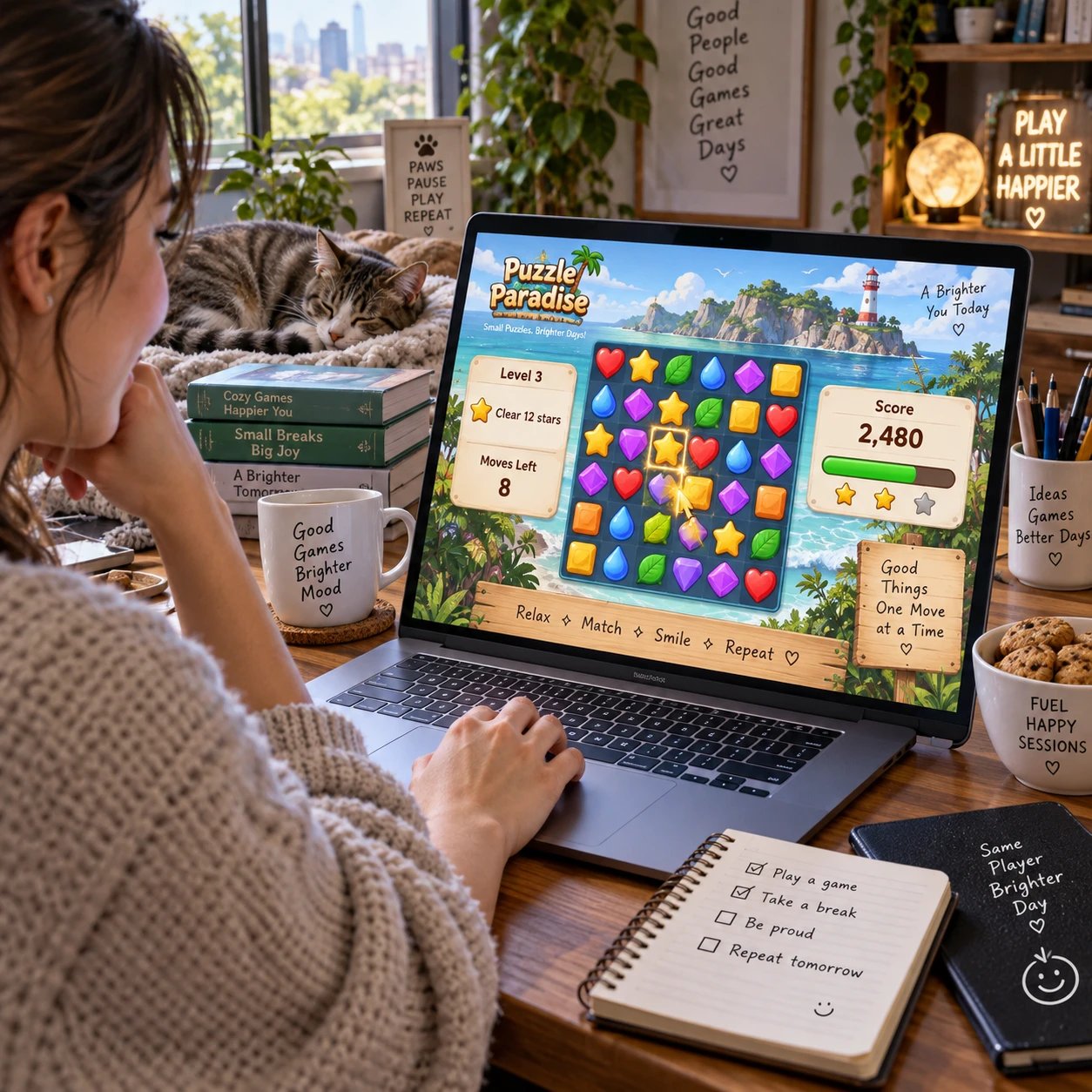
A quick browser game can turn a spare minute into a satisfying break. The rules are easy to grasp, the response to each move is immediate, and there is often a clear reason to try one more round. These qualities explain why casual games are engaging, though they do not mean every game is deliberately designed to be addictive.
Understanding the psychology behind casual games helps explain what keeps players coming back—and how to enjoy that appeal without letting play crowd out sleep, work, or other priorities.
What Makes a Casual Game Easy to Start
Casual games are easy to start because they reduce the effort needed to begin: the rules are simple, browser access is quick, and rounds often fit into a short break. That low barrier makes it easy to try a game without planning a long session.
In a browser game, access may be as simple as opening a page and clicking “play.” There may be no download, lengthy tutorial, or complicated control scheme. A familiar task—matching tiles, guiding a character, or aiming at a target—can teach the basics through play.
Short rounds also make casual games convenient. A player can finish a level while waiting for a meeting or take a break between other tasks. This flexibility is a real benefit, but it can blur the boundary between a quick visit and a longer session if the next round begins instantly.
Good onboarding gives players enough information to make a meaningful first move, then introduces extra rules only when they matter. Clear instructions and a forgiving opening level help people feel capable rather than lost. Easy access attracts attention; a well-paced first few minutes give players a reason to stay.
The Reward Loop That Brings Players Back
A game reward loop is a repeating cycle in which a player takes an action, receives feedback, and gets a result that encourages another action. In casual games, that cycle might be matching pieces, seeing the score rise, and then starting a new round to improve the result.
The feedback can be modest: a sound, animation, score change, cleared board, or completed objective. Immediate feedback makes the connection between a choice and its outcome easy to understand. A successful move feels satisfying because the game confirms it at once; a mistake can also teach the player what to change next time.
Rewards do not have to mean prizes or purchases. Finishing a level, beating a personal best, or unlocking the next stage can all provide a sense of completion. A good reward loop supports learning as well as enjoyment, showing players that their decisions have an effect.
However, a loop can feel tiring when every action triggers a flood of alerts or when rewards seem tied to pressure rather than play. Players can ask a useful question: does the feedback help me understand or enjoy the game, or is it mainly pushing me to continue? That distinction says more than the presence of points or badges alone.
Progress, Challenge, and the Flow State
Progression systems and balanced difficulty can hold attention by giving players achievable goals that become gradually harder. When a task is neither too easy nor too demanding, players may enter a flow state: focused involvement in an activity, with attention centered on what they are doing.
A browser puzzle might begin with a small board and a generous time limit, then add obstacles or tighter goals over later levels. The player can use skills learned earlier while still needing to adapt. A visible progress bar or sequence of completed stages makes improvement easier to notice.
Challenge and skill balance matters because either extreme can break engagement. A level that is too easy may feel repetitive; one that is too hard may make progress seem out of reach. Useful design gives players a fair chance to learn, recover from errors, and recognize why they succeeded or failed.
Progress can also become a source of pressure if a game makes every pause feel like lost ground. A healthy progression system respects the player’s time: goals remain clear, failure does not erase excessive effort, and stopping does not come with a penalty designed to create anxiety.
Why Small Surprises Feel So Engaging
Unpredictable outcomes can make casual games feel fresh because players cannot always know exactly what will happen next. A changing board, a shuffled set of items, or a different obstacle can add variety to a familiar reward loop.
This kind of variable reward means that the timing or form of a positive outcome changes rather than arriving in precisely the same way every time. In a puzzle game, the next board may offer a clever combination—or require a new tactic. That uncertainty can make a round interesting, especially when the player still has meaningful choices.
Surprise is not automatically manipulative. Randomness can create replay value, but it works best when the game remains understandable and fair. Players should be able to see how their actions influence results, even if they cannot predict every detail.
It helps to distinguish playful novelty from pressure. A game that varies its levels invites curiosity; a game that uses unpredictable rewards to make stopping feel costly may be less comfortable to play. The experience depends on the whole design, not on randomness alone.
The Social Pull of Scores and Competition
Social competition can make browser games more engaging by giving players a shared goal, a friendly rival, or a score to beat. Leaderboards and score comparisons add context to a result that might otherwise feel like a private achievement.
A leaderboard can motivate a player to replay a short level and improve a personal best. Shared goals, such as contributing to a group target, can make progress feel collaborative rather than competitive. These features are optional in many casual games, and a solo experience can be just as satisfying.
Friendly rivalry works best when the comparison feels fair. Players should know what a score measures, and a leaderboard should not imply that everyone has had the same time or conditions to play. If rankings cause frustration, hide them or focus on personal progress instead.
Social features can also turn a quick break into a commitment to keep up with friends. A useful boundary is to treat scores as information, not an obligation. The game should fit around relationships and routines, not make every notification feel urgent.
Enjoyment Versus Unhealthy Play
Enjoyable play feels voluntary and fits alongside other responsibilities; unhealthy play becomes harder to control and repeatedly disrupts daily life. A single long session does not establish a problem, so pay attention to patterns and consequences rather than judging yourself by minutes alone.
Consider whether you can stop when you planned to, whether play regularly cuts into sleep or work, and how you feel when you are away from the game. These questions are practical signals, not a diagnosis. If gaming is causing ongoing distress or serious disruption, consider speaking with a qualified health professional.
To build healthy play habits, choose a stopping point before opening a game. For example, decide to play three rounds or stop when a break ends. A timer can help, particularly when browser games offer instant restarts. You can also close the tab when finished rather than leaving it open as an invitation to resume.
- Play during a planned break instead of using games to avoid a task indefinitely.
- Turn off nonessential game notifications if they interrupt other activities.
- Pause when play stops feeling enjoyable or begins affecting sleep and responsibilities.
These habits are simple, but they protect the difference between choosing a game and feeling pulled back into it.
What Players Can Look for in a Well-Designed Game
A well-designed casual game makes its rules clear, rewards understandable choices, and lets players progress at a fair pace. Look for an experience that respects your time and remains enjoyable even when you choose to stop.
Before settling into a browser game, check whether the opening explains the basic controls and whether the first challenges give you room to learn. Notice how the game responds to your actions: good immediate feedback clarifies what happened without overwhelming the screen.
Fair progression is another useful sign. Levels should build on skills rather than rely on unexplained difficulty spikes, and the game should not make ordinary pauses feel like failure. If scores or social competition are included, they should add enjoyment rather than make participation feel compulsory.
A simple player’s test is to ask three questions: Do I understand what I’m doing? Does progress feel fair? Can I stop comfortably? If the answer is yes, the game is more likely to offer engaging play on your terms. Casual games work best as a source of fun and focus, not as a demand on every spare moment.
Frequently Asked Questions
Why are casual games so easy to pick up? They usually have simple rules, familiar actions, quick browser access, and short rounds. Players can learn by trying a move rather than studying a long tutorial.
What is a reward loop in a game? It is a cycle of action, feedback, and reward. A move leads to a visible result, such as points or a cleared level, which can encourage another turn.
Do casual games use variable rewards? Some do. Changing boards, outcomes, or small rewards can add novelty, but games vary, and unpredictability alone does not prove manipulative intent.
How can I tell when gaming is becoming unhealthy? Notice whether you often play longer than intended or whether gaming repeatedly disrupts sleep, work, relationships, or other responsibilities. If the pattern causes distress, consider seeking professional support.